
Introduction:
Construction projects today are more complex than ever—multiple stakeholders, tight timelines, global supply chains along with the increasing reliance on the digital workflows. Yet, despite the technological advancements, coordination failures remains one of the leading causes of the project delays and cost overruns.
According to the industry studies, nearly 52% of the rework in construction is attributed to the poor project data and miscommunication, while the large-scale projects typically experience cost overruns of up to 20% due to coordination gaps. These inefficiencies not only impacts the budgets but also compromises on the quality, safety and client satisfaction.
This is where BIM Coordination Services plays a critical role in bridging communication gaps, aligning disciplines and also ensuring that the design intent translates seamlessly into the execution.
Conclusion: From Coordination Failures to Project Success
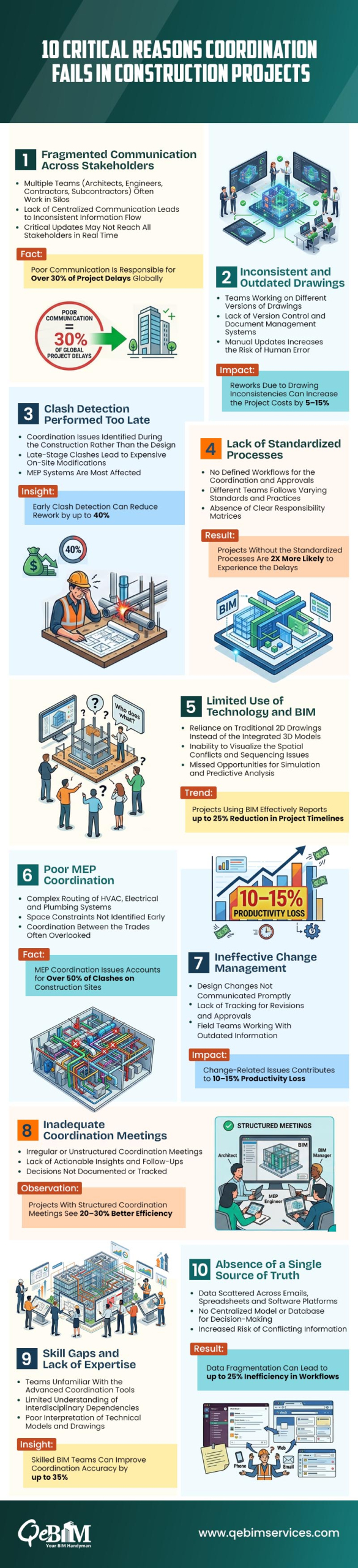
Coordination failures are not just operational issues—they are the strategic risks that directly impacts the project timelines, costs and overall success. As the construction projects becomes more data-driven and multidisciplinary, the margin for error continues to shrink.
The solution lies in adopting the structured workflows, leveraging the advanced technologies and fostering a culture of collaboration. By addressing these common coordination challenges proactively, the project teams can significantly reduce reworks, enhance productivity and even deliver higher-quality outcomes.
In an industry where precision is critical, effective coordination isn’t a choice—it’s a key driver of competitive advantage.