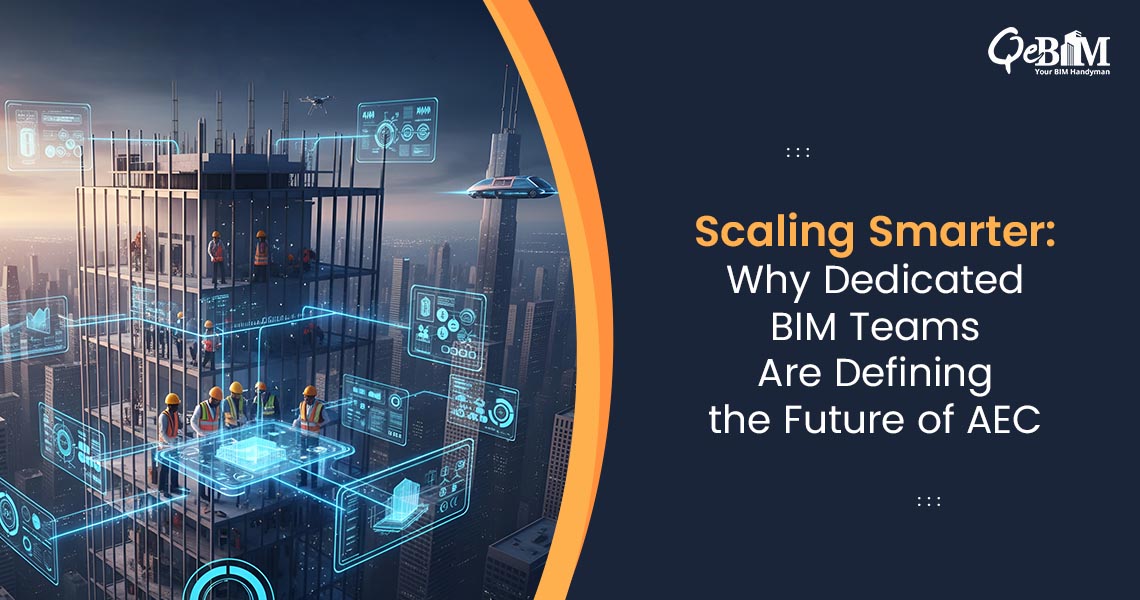
In today’s rapidly evolving AEC industry, the firms faces increasing pressure to deliver the higher quality projects faster, at lower cost and with the greater sustainability — all while managing more complex stakeholder expectations than ever before. To win in this competitive environment, AEC firms must go beyond the traditional workflows. The future belongs to the organizations that intelligently scale their project delivery with the dedicated BIM teams and embrace the digital transformation across the project’s lifecycle.
The Transformation Imperative in AEC
BIM is no longer about the future; it is a present-day necessity for competitive AEC firms. According to the industry data, overall BIM adoption rates among the AEC firms are approaching 80%, with architects and engineers increasingly integrating BIM into the majority of their projects. (Vectorworks.net)
Moreover, the widespread use of BIM brings the measurable benefits: when used on more than 75% of projects, firms reports improved design quality, enhanced collaboration and significant reductions in errors and reworks. (Autodesk.net)
Why Dedicated BIM Teams Matters?
While individual projects may benefit from a BIM model here and there, scaling complexity and project volume demands more than occasional use — it requires dedicated BIM teams. These specialized groups provide focus, consistency and expertise across all the project phases thus helping the firms to standardize the processes and unlock full digital potential.
- Enhanced Collaboration Across Disciplines
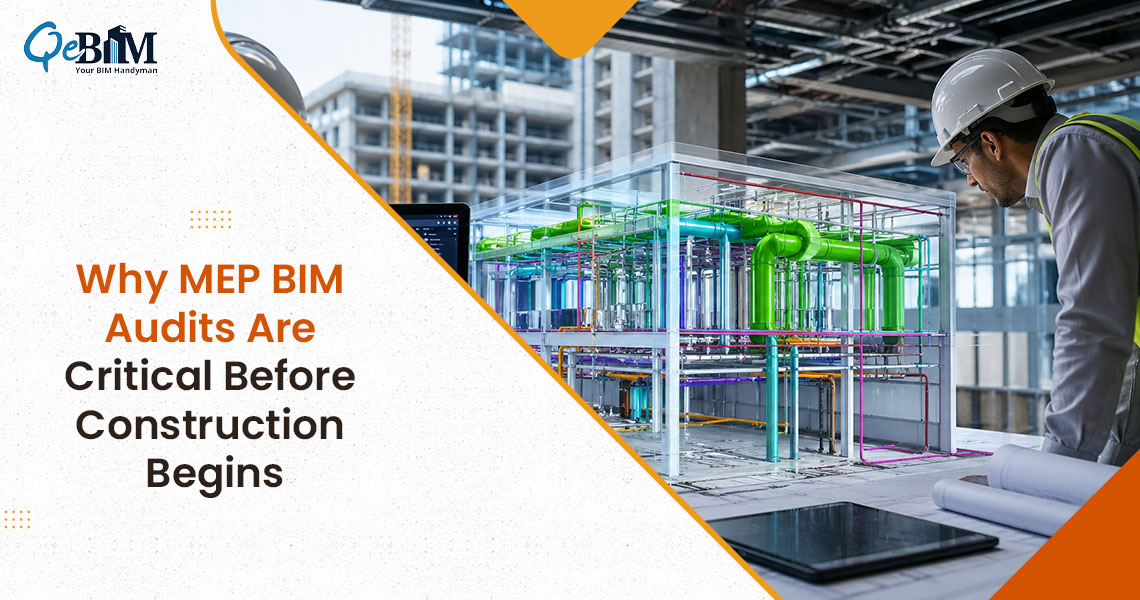
Dedicated BIM teams act as the central coordinators for multidisciplinary design inputs, connecting architects, structural engineers, MEP professionals and contractors through shared data and a single digital model. This eliminates silos, reduces the miscommunication and ensures that the clashes are found and resolved in the digital space long before the construction begins thus minimizing the reworks and delays.
- Better Project Predictability and Risk Management
Incorporating advanced BIM workflows such as 4D (time) and 5D (cost) simulation allows the project teams to visualize the build process across the schedule and budget, delivering early insights into sequencing, risk scenarios and cost drivers. This level of analysis enhances the predictability and fosters proactive risk mitigation.
- Increased Efficiency and Cost Savings
Traditional design and coordination inefficiencies accounts for a substantial portion of wasted resources in construction. With robust BIM processes driven by the dedicated teams, the firms can improve the project timelines and reduce the costly changes on site. Case studies shows example gains such as 20% faster delivery, 30% fewer errors and 15% less material wastage through the structured BIM workflows. (Revitmodelingindia.com)
- Higher Quality Deliverables
Specialized BIM teams can produce the detailed, data-rich digital models — from initial design to final construction and operations — that provides precise documentation and verification at every milestone. This is especially critical in BIM Architectural Services, where quality visualization, coordinated design documentation and integrated clash detection elevates the design outcomes and client satisfaction.
Technical Insights: What Makes Effective BIM Teams
A future-ready BIM team blends the technical skills, digital tools and structured workflows. Here’s how the top firms structure their BIM capabilities:
- Advanced Modeling Expertise: Teams utilize tools like Autodesk Revit to create LOD (Level of Development) models — ranging from the conceptual (LOD 100) to detailed construction-ready (LOD 500) models thus ensuring high fidelity and accuracy throughout the project phases.
- Cross-Platform Coordination: By using the cloud-based Common Data Environments (CDE), BIM teams synchronizes the data across the stakeholders hence delivering the real-time access and version control that the traditional 2D workflows cannot support.
- Clash Detection and Resolution: Through automated tools and coordinated BIM workflows, teams identifies the design conflicts early thus reducing the costly reworks and schedule overruns.
- 4D/5D Integration: Linking schedules and cost data to the BIM model enhances the planning and financial insights, allowing firms to simulate the “what-if” scenarios and make informed decisions before breaking the ground. Tools and processes that supports these integrations differentiate firms that are future-ready versus those that lag behind.
Strategic Value: Growing Services and Competitive Edge
As firms build out their dedicated BIM capabilities, they can also expand service offerings and value propositions:
- BIM Modelling Services becomes a core capability for driving the pre-construction clarity, optimizing the design intent and enabling the better project planning.
- BIM Architectural Services elevates the design quality and client value through enhanced visualization, documentation and interdisciplinary coordination.
- Firms with strong BIM teams reports increased win rates and stronger repeat client relationships as the digital execution quality becomes a differentiator rather than a commodity.
Additionally, the growth of education and training around BIM — such as the projected 81% revenue growth for BIM/VDC training platforms — underscores the rising demand for the skilled professionals in this domain. (The Economic Times)
Conclusion: The Path to Future-Ready AEC
The future of AEC isn’t defined by size or regional presence — it’s determined by the digital readiness, teamwork and the ability to scale the complex projects efficiently. Dedicated BIM teams are no longer optional; they are strategic assets that drives the digital integration, enrich the design and execution as well as unlocks the performance gains across the project’s lifecycle.
By investing in the core BIM capabilities, focusing on the technical excellence in BIM Services and fostering a culture of continuous learning, the AEC firms position themselves to thrive in a future where the data, collaboration and digital workflows defines the success.