Introduction
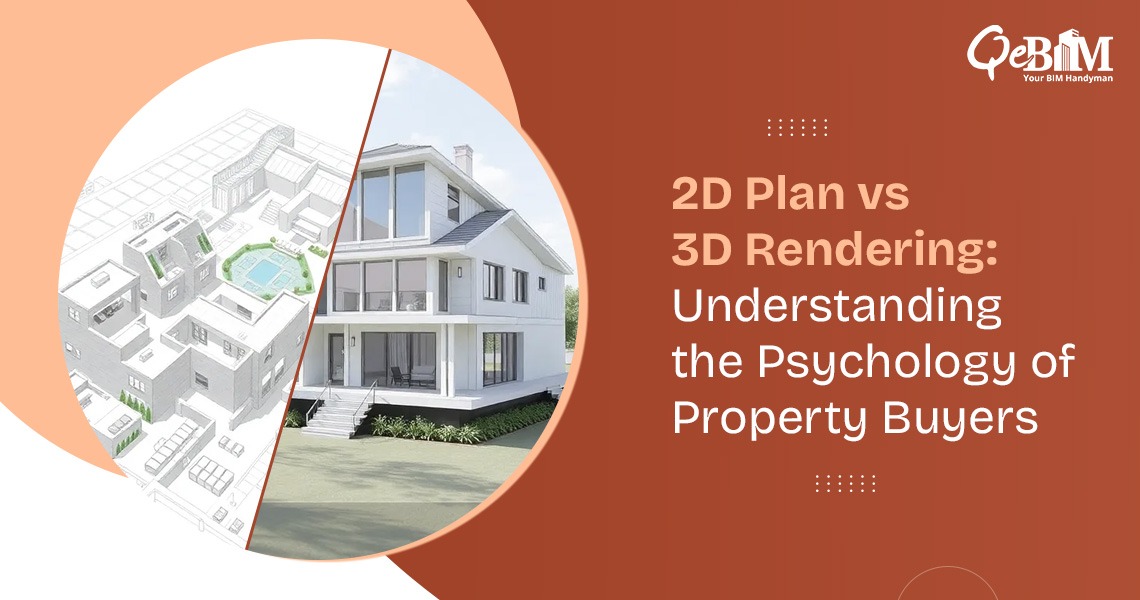
In real estate, architecture and property marketing, visual communication plays a critical role in influencing buyer’s decisions. Initially, 2D floor plans were used to represent the spatial layouts and technical details. However, as the market becomes more competitive and buyer expectations evolves, 3D Visualization Services have emerged as a powerful tool to bridge the gap between the design concepts and buyer’s understanding.
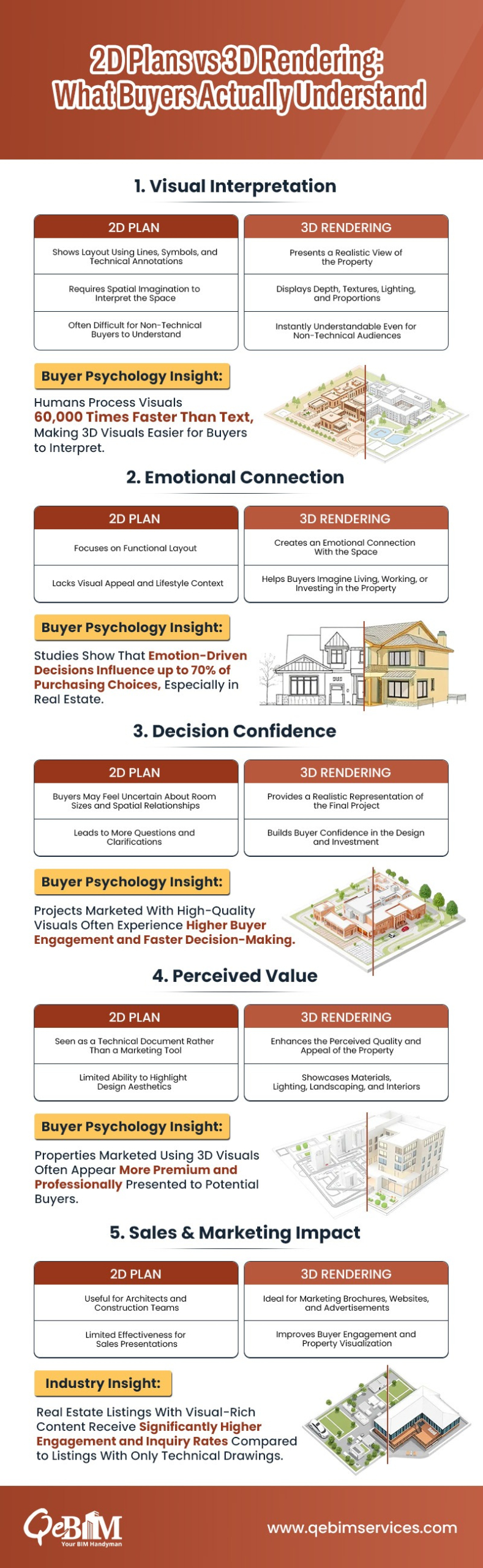
From a psychological perspective, buyers often struggle to interpret the technical drawings. While professionals such as architects and engineers can easily read 2D plans, most property buyers rely on visual cues and emotional connection to evaluate a space. This is where 3D rendering transforms the buying experience by converting abstract information into realistic, immersive visuals.
Understanding how buyers perceive and respond to these two formats can significantly impact the marketing success, project approvals and overall sales conversions.
Conclusion
While 2D plans remains essential for technical documentation and construction processes, they often fall short when communicating the design intent to property buyers. Modern buyers seek clarity, realism and emotional engagement before making a purchase decision.
3D rendering bridges this gap by transforming the technical drawings into visually compelling experiences that helps the buyers to understand, connect with and trust the design. By aligning the architectural presentation with the buyer’s psychology, developers and architects can significantly improve the project marketing, buyer’s confidence and sales performance.
In today’s competitive property market, leveraging advanced visualization techniques is no longer just an option—it has become a strategic advantage in shaping the buyer’s perception and accelerating the decision-making.